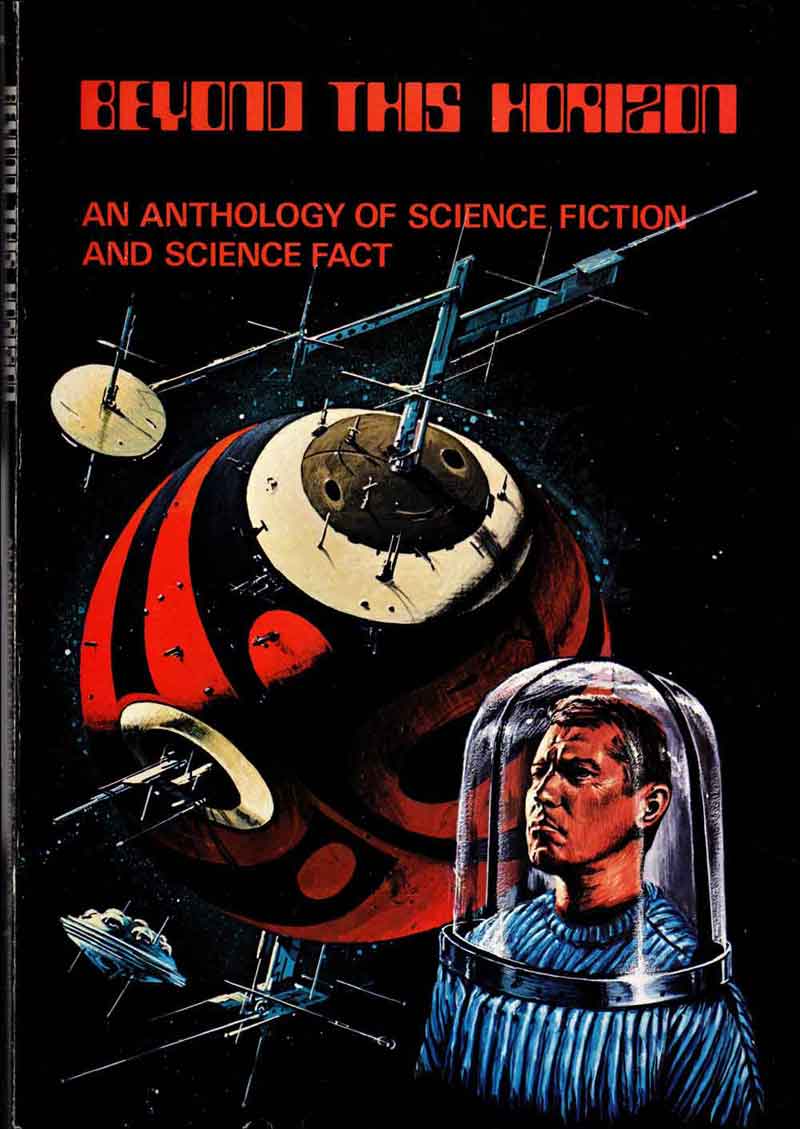
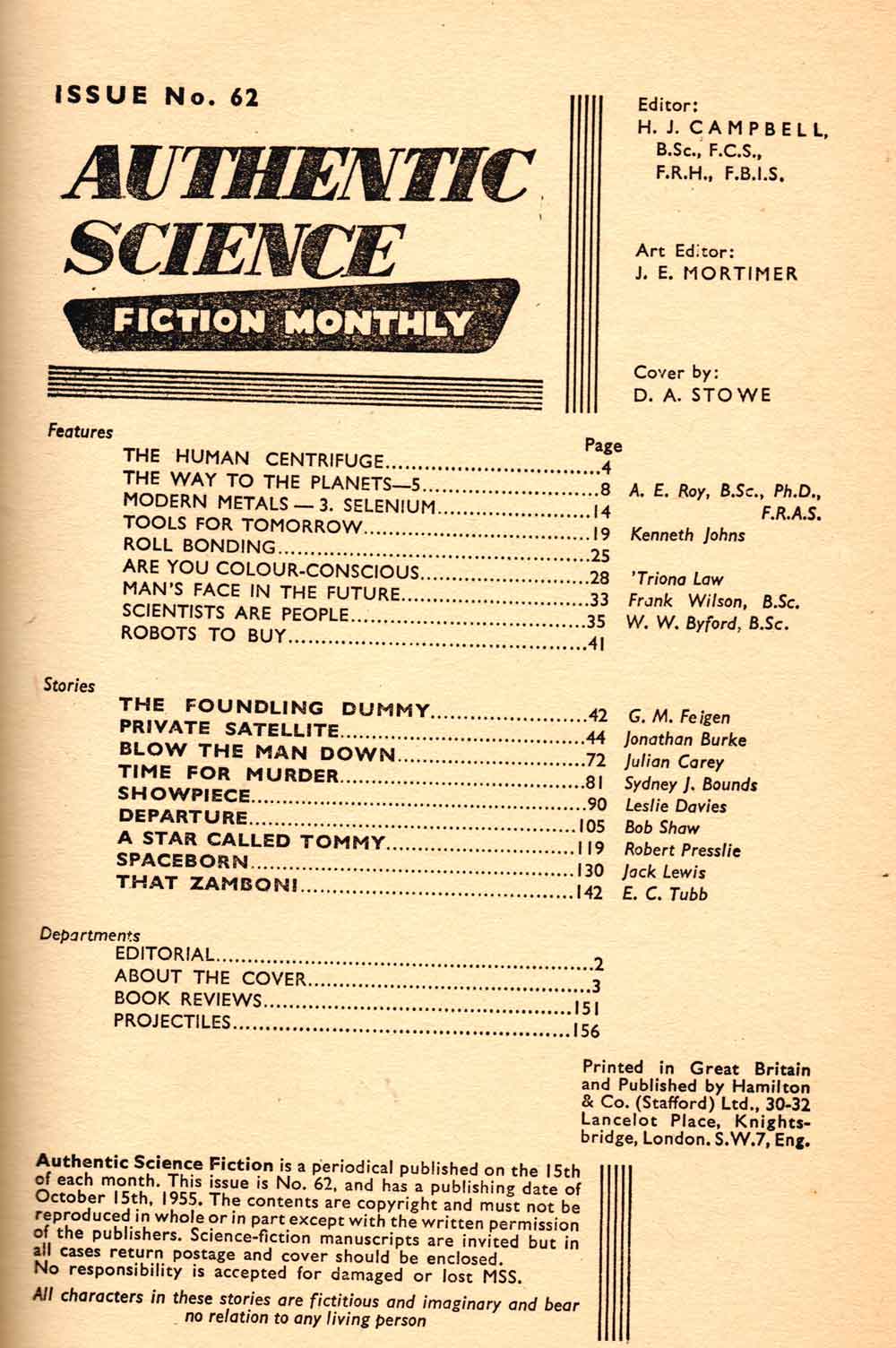
Warren Peace, Gollancz, Hardback, ISBN 0-575-04918-9
Warren Peace was published by Gollancz in hardback in 1993 but renamed as ‘Dimensions’ when it came out as a paperback – also published by Gollancz in the UK. It is the sequel to Who Goes Here?
I had this short review all ready until I realised something: it is also the last novel that Bob Shaw published. It has been said that Shaw went through a period of writer’s block: indeed during the eighties and nineties Shaw released revised and updated versions of his works. For books like Ground Zero Man and The Shadow of Heaven this may have been justified as they had limited releases in the UK on their first outing. For a while Shaw issued a book a year: indeed during the seventies there were sometimes two per year, with the latter part of the seventies perhaps his most productive time.
Although saying Warren Peace is a sequel may not be entirely accurate as the book takes the story, characters and situation to a different level.

Peace is now one of the Oscars, the elite Golden Supermen who have no need for food, drink or sex. But Warren is not happy with his situation. In fact he is bored rigid. We meet him on the eighth day of the Oscar Galactic Jamboree and he is not having any fun at all. Luckily for Warren he comes across a group of criminals who are getting ready to attack the Oscars.
Warren thinks the plan is to strand the Oscars on the planet but the big glowing purple rock that is dropped on them and kicked away into space by Warren has more implications.
The rock turns out to have been Pryktonite, which for Oscars is a fate worse than death – it turns them back into human beings.
The Oscars quickly deduce that this is the work of the Galaxies greatest villain, Jeeves. Jeeves has evaded the Oscars by reverting to his nice side any time he is captured. However, his evil side will want revenge on the person who foiled his plan to eliminate the Oscars: Warren Peace.

The Oscars want to protect Warren but Warren doesn’t want to be bored to death by their lifestyle. He is still kept within the Oscars but sent to worlds where the Oscars can’t do much. His first job is at the sea planet Golborne where he has to work out what exactly is the alien porn that keeps turning on the workers called squelchers.
It is on this planet that Peace is caught in an elaborate trap laid out by Jeeves, who, in classic villain style, explains the trap to Peace. It seems that Jeeves’ assistant, Wimpole, didn’t get the black holes needed for the plan but instead got Puce Holes, which have an entirely different effect.
Peace thinks he has only been displaced in space due to the actions of Jeeves. His ship is lost in waters as he lands. The situation becomes confusing as Warren tries to figure out where and when he is without making the locals suspicious – it doesn’t work as the local Landlord gets angry at Warren a couple of times; the threat of violence which he manages to extricate himself from.
Warren quickly concludes that he is in another universe, where time and circumstances were different and society grew in a different direction. His next step was to go to Manchester, where they built spaceships. Warren gets a job as a draughtsman and his next plan is to work out how to get back to his universe and tackle Jeeves.
To be honest the book is a bit of a mish-mash, and I think Shaw padded it out with a couple of short stories from elsewhere as the first part of the book is a little episodic, something similar to Ship of Strangers which was a novel created from previously published short stories.
This doesn’t stop it being tremendously enjoyable – although not quite as funny as the predecessor Who Goes Here – particularly when Warren finds himself in an alternate world with a close resemblance to Victorian society. Personally I found too many situation changes for my liking. Generally there is only one real twist in most novels, which should occur halfway through. With Warren Peace there are a couple which, although it doesn’t spoil enjoyment of the book, didn’t ring right either.
This may have worked a little better if it wasn’t linked to Who Goes Here? An entirely separate hero going through the latter half of the novel may have been more entertaining and rewarding. Certainly the predicament Warren finds himself in halfway through the novel is very far removed from the central premise and the central threat of Jeeves.
The Jeeves/Oscar storyline could have been issued on its own and the time/alternate universe story could easily have stood on its own.
But we have this novel from Bob Shaw, his last. Not by any means his best but a good solid novel revisiting familiar characters and exploring high concept ideas. The alternate universe was well drawn and well thought out and would have been fun to explore further.
Lick o paint
With the release of a new version of Artisteer I decided to give the theme for this blog a little update. I reinstalled my copy of Adobe Photoshop Elements because anything has to be better than PaintShop Pro 5. It’s version three of Photoshop Elements and it doesn’t do CMYK (Cyan Yellow Magenta Black format, more colours) files, only RGB (Red Green blue format, less colours) , but I can still export to web formats such as GIF and jpeg. So I changed the header a little, gave the blog theme a different colour scheme and fiddled about with a few other things.
Who Goes Here?, Gollancz, Hardback, ISBN 0-575-02347-3
I bought Who Goes Here in the Ace paperback edition and enjoyed it immensely when I first read it. This is a good old fashioned comedy romp through space and alien worlds with funny situations and some inventiveness from Bob Shaw in the form of space travel, aliens and wacky characters.

Who Goes Here was first published in 1977 and was good enough to warrant a sequel, Dimensions, also published as Warren Peace.
Warren Peace, the hero of this book, wakes up to a pretty nurse who asks him if he feels better. He does but he is a little confused. Slowly it is brought to his attention that he has signed up for thirty years* service of the Space Legion. Questioning why he would be stupid enough to sign up to the Space Legion he is answered with another question: Why did people sign up to the French Foreign Legion? To forget he tells Captain Widget.
And that’s the same reason people join the Space Legion; to forget. And the Space Legion has a machine that removes memories so people do forget.
Unfortunately for Warren Peace he seems to have forgotten everything.

Everyone that he subsequently meets responds to this with ‘You must have been a monster!’
Peace doesn’t believe he has signed up for the Space Legion, until he sees himself on video doing exactly that, and he also sees his signature on the contract.
Peace soon finds that there are precautions built into the system to stop recent recruits defaulting on contracts or trying to disobey. Each recruit has a Mark Three command enforcer surgically implanted in them. It adds harmonics to the voice which ensures ‘absolute, unthinking obedience’.
One of the funniest scenes for me was when Peace decided to get out of the situation by getting a hulking great Sergeant mad at him. It’s a great pay off to the situation which I won’t spoil for anyone who hasn’t yet read the book.
Peace finds himself and his new friends in the 203 Regiment, sponsored by Triple Ess; Savoury Shrimp Sauce, and soon they are onto basic training – with some of them still harbouring plots of escape – which consists of pulling the trigger on their weapons and hitting the target. Peace and the rest of the group – the Fort Eccles class of ten am – were then shipped out.
Peace is annoyed at the wait when they are in a long narrow room with benches, waiting for the transfer to the tall ships for space travel to the stars; so much so that to the at first humorous delight of the others he tries to open the door of the room. It is then, with his friends sitting on his chest after having stopped his attempt to open the door, that peace finds out they are in the ship, and that it is hurtling through space as they speak using ‘Non-Elucidean tachyon displacement’. Or instant matter transmission.
Not across vast distances but only a few hundred metres: the ship transmits itself forward a few hundred metres to the receiver at the other end.
They find themselves thrown straight into the action under the command of the youthful Lieutenant Merriman.
Warren finds out his weapon isn’t as effective as he was told it was; however he not only survives but gets himself a prisoner of war. And there is the first mention of the ‘throwrugs and the Oscars’. And no the Oscars aren’t an award. The capture of a prisoner means that Peace and the rest of the unit are considered too good for this battle, and are shipped out to Threlkeld, a planet without intelligent species and where the only job of the Legion is to make the jungles safe for miners
However, Peace wants out, and he wants to rediscover his past, find out who he is and why all his memory was wiped. It’s on Threlkeld that Peace devises his plan to escape from the Legion, and with a little buttering up of Merriman – from whom he gets the broadcast frequency of the voice command enforcer – he can create a device which nullifies the effect of the voice command enforcer.
Finally Peace gets to the planet he wants to, Aspatria. There he uses his four hours leave to escape from the Legion and start to investigate his past, and get back his memories.
This is more of a talky novel than other of Bob Shaw’s work in that there is a lot more dialogue in this novel than normally in a novel by Bob Shaw. It’s very funny in places and moderately funny in other places. There are a few running jokes which crop up throughout the book and these are well used by Shaw: not overused as can happen. A lot of the book is snappy and a lot of the dialogue rolls on, taking the reader further into the story and letting us get closer to Warren and the other characters – even the minor ones. It is a very enjoyable book by Bob Shaw, although its core isn’t as high concept as some of his other work.
* The figure thirty can read as taken to be forty, or even fifty, according to the contract.
Notes From Mike Moir
Mike Moir kindly commented on the previous blog entry Killer Planet, and provided some excellent information that gives a little more personal depth to the book in particular and Bob Shaw in general.
‘You might like to know that Killer planet was originally commissioned as an intro to a game! Sadly that never happened – eventually Bob decided to rework it as a ’short’ Juvie,’ adding ‘Many of the names in the story are people who used to meet with Bob in Warrington at the local SF group in the early Eighties.’
‘The Gemmel drive was named after Ron Gemmel.’ Mike himself also had his name taken – slightly in vain – when it was used as the surname of the main female character. ‘Bob knew I’d be a little miffed (yet strangely honoured) as one of the opening lines of the book was ‘Grown ups! Listen to old Granny Moir’ (p5),’ Mike said.
It may be a good solid piece of work from Bob but perhaps it was issued partially to help pay the bills: ‘Bob, was struggling a little financially at this time – Luckily it would change a little bit with the Ragged Astronauts -but alas he was never very rich and could not afford to let something like this ‘Game into’ languish un published.’
Bob also dedicated his non fiction book, How To Write Science Fiction to Mike and his wife Debby, ‘after (Mike) helping him a bit with the book (just checking facts -nothing clever) he did my wife and I the great honour of dedication it to us -Mike and Debby.’
And lucky Mike has a full Gollancz collection of Bob’s books.
‘I still miss him’ Mike states.
Everyone who has said they knew Bob Shaw always has something good to say about him. Nothing has been negative. Bob Shaw was not only one of the best writers to come from the UK but also one of the most loved.
Killer Planet, Gollancz, Hardback, ISBN 0-575-04510-8
A little confession here: I bought a second hand copy of Killer Planet in hardback sometime in the early nineties but I never got round to reading it. When bought the book was put at the bottom of my reading pile, and it sort of stayed there. As books moved from room to room when space was needed here and there I never actually got round to reading it.

When I started completing my collection of Bob Shaw Gollancz hardbacks again (I briefly tried years ago with little success) the book Killer Planet was brought to my attention again as I looked through the books to see what was still to get and I put Killer Planet further up my list of books to read. But, again, it never made it to the front row – even though I found time to skim trough his other books while creating these reviews and on a couple of occasions completely re read some of Shaw’s books.
So. I set aside some time and decided to concentrate on this book. Unique among Shaw books in that it is for a specific audience. Killer Planet is a Young adult novel from Bob Shaw and so is a very slim book, coming in at just over one hundred pages.
Published in 1989 the brief prologue sets us up for many dangers, telling us that after mankind learnt to cross the distance between stars with the Gemmell drive he came across Mother Nature at her fiercest, with new dangers everywhere he turned.
The most dangerous of these was Verdia, nick named the Killer Planet. Many people had gone to the planet never to return, including the brother of Jan Hazard. Hazard’s father, Donn, had spent the last few years working toward sending an expedition to the planet to rescue his son. A mission he intended to do alone. Jan though has other ideas; he knows his father would not be up to the job and is adamant that he will take his father’s place, go to Verdia and rescue his brother.
Unfortunately Donn Hazard has neglected to pay the bills during his quest to build a spaceship to go to Verdia and with the most inappropriate timing bailiffs turn up the day before the launch to confiscate all of Donn’s possessions to pay off his debts. Jan has no other option. The flight must go ahead; the rescue attempt must be made. And so Jan steals the ship and the rescue attempt is still on.
He makes it to the system where the Killer Planet is and is surprised to discover someone else on board. Petra is the love interest of the story, introduced in Chapter one as a friend. Jan is initially against her presence but as luck would have it Petra manages to take control of the ship when Jan is knocked semi unconscious at the final take off toward the planet.
The ship struggles through the cloudy atmosphere of the planet, nearly destroying the vessel – which is made out of hard plastics rather than metal due to the nature of Verdia, which attacks metal. They land on the planet and straight away are caught up in the weird and dangerous life forms on the planet as they try to investigate an old ruined city.
But it is when they discover the shattered and seared ships and equipment that the real surprise of the Killer Planet shows itself.
This is pretty much an action adventure from Bob Shaw, as mentioned geared toward the younger reader. There is a lot of vivid descriptive writing from Shaw and the characters are the straight forward no nonsense hardy type. Also, being designed for the younger reader, the book isn’t very long, in fact it is too short.
It took me a little while to get into the swing of the book, and Shaw only gave us minor glimpses of characterisation to help identify with each character in the book. The emotional attachment of going to the Killer Planet to rescue their sibling gave a good enough motive, and the action of the escape from earth forces was well written, well paced and enthralling, however the characterisation lacked a little in my opinion.
Overall it was an enjoyable read, really only picking up in pace and excitement when the protagonists actually reach the Killer planet around Chapter Five, and Shaw is very inventive in getting his heroes out of the scrapes they find themselves in on the planet. A mixture of daring do and brains keeps the two – Jan and Petra – alive to fight again. The whole story is neatly tied up with a happy outcome for all concerned following an adventurous and thrilling dénouement. This novel would make a good introduction to Bob Shaw, particularly for the target audience of the young adult.